
Edmond H. Fischer and La Châtaigneraie
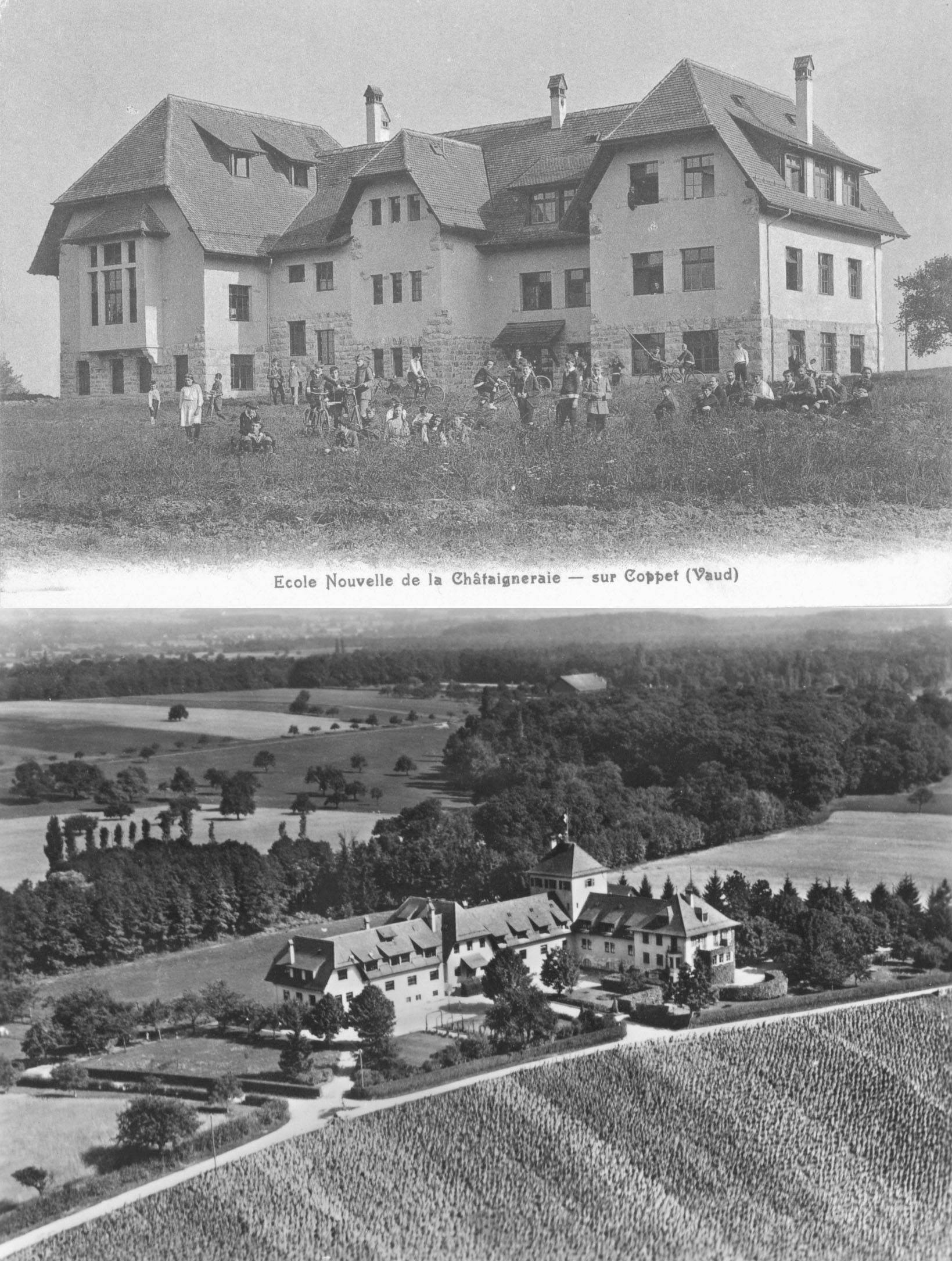
La Châtaigneraie has flourished and expanded spectacularly since it became part of the International School of Geneva in 1974, but its pre-Ecolint existence was distinguished in its own right. Founded in 1908 as the Ecole Nouvelle du Léman / de la Châtaigneraie (both names were employed), it was from the start co-educational (which was highly unusual at the time), with a noble vocation of inclusion and open-mindedness towards all, and alongside academic excellence, it emphasized “moral education” in the light of Christian ideals. Therefore, though La Chât did not define itself as an international school — indeed, this concept was unknown until the International School of Geneva was conceived in 1924 — it foreshadowed from the outset many of the values of Ecolint, and blended naturally with the latter when the time came. Interestingly, Ecolint’s first director, the eminent educator Paul Meyhoffer (who had trained as a pastor, and was a member of the influential Institut Jean-Jacques Rousseau) taught at La Châtaigneraie (as it was always popularly known for short, regardless of its official name) before participating in the creation of our school.
La Châtaigneraie underwent two further transformations, becoming the Collège Protestant Romand in 1954, and then the short-lived Collège Internationale de la Châtaigneraie in 1971, before the merger with Ecolint three years later gave rise to a two-campus Foundation (further expanded to three campuses with the inauguration of Campus des Nations in 2005).*
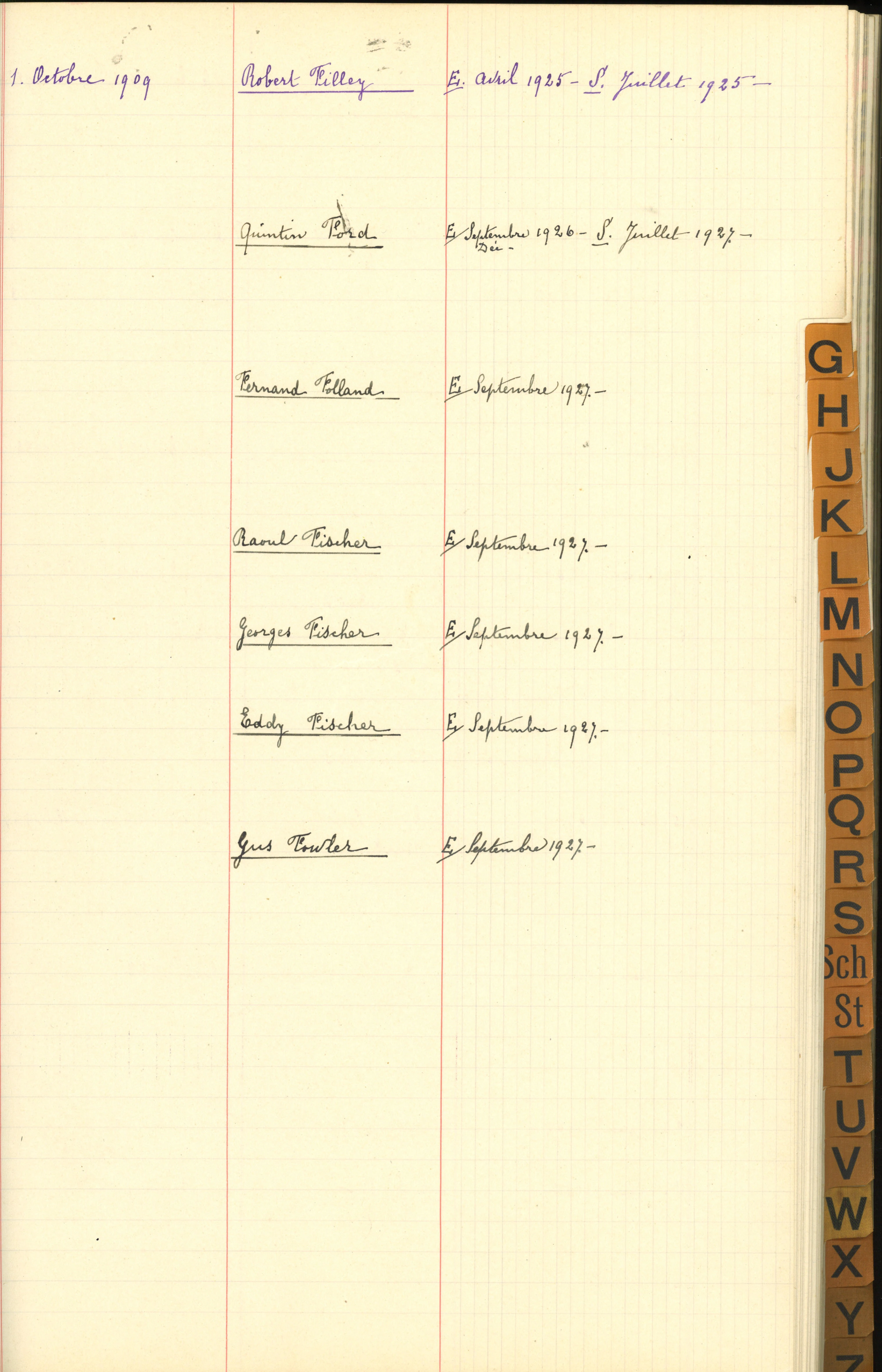
An eminent alumnus of the first stage of La Chât’s existence, in the late 1920s and early 1930s, was Edmond H. Fischer, who died on the 27th August in Seattle, at the impressive age of 101. When he was 7 years old, Eddy (as he was known at La Chât) was sent to Switzerland from Shanghai (where his parents were living at the time) and was enrolled as a boarder in La Chât in September 1927, together with his two older brothers, Raoul and Georges. (Curiously, the three brothers’ nationality was recorded as Italian, although their mother was Franco-Swiss and their father Austrian.)
Raoul went on to study engineering at the Swiss Federal Polytechnic Institute in Zürich (where Einstein had also studied, and later taught from 1912 to 1914), and Georges read Law at Oxford University. As for young Eddy, to begin with, he gravitated towards music, and in parallel with his studies at La Chât enrolled in Geneva’s Conservatoire de Musique. Although he took his musical studies seriously, he eventually opted to pursue Organic Chemistry at the University of Geneva, where he earned his PhD. (Nevertheless, he continued to play Mozart and Beethoven piano sonatas all his life, proficiently and in public – most recently, at his grandson’s wedding earlier this year.)
In 1950, Dr Fischer was granted a post-doctoral fellowship by Caltech. However, when he arrived in Pasadena, he found waiting for him an invitation to join the faculty of the Department of Biochemistry at the University of Washington in Seattle. The landscape around Seattle, reminiscent of Switzerland, so seduced him and his first wife (who was also Swiss, and died in 1963), that they decided to settle there.
As it happens, it was a felicitous choice, as he developed a scientific partnership in Seattle with Edwin G. Krebs, a fellow biochemist, focusing on the fundamental mechanisms employed by cells to communicate with one another. Their discovery of reversible protein phosphorylation earned them the Nobel Prize for Physiology or Medicine in 1992. Both before and after his Nobel Prize, Dr Fischer received other awards and honours too numerous to list here. Such was his perennial mental acuity, that (according to the obituary published by The New York Times on the 2nd September 2021) he continued to attend Biochemistry presentations even after his 100th birthday, typically sitting in the front row and “asking (…) some of the best questions in the room.”
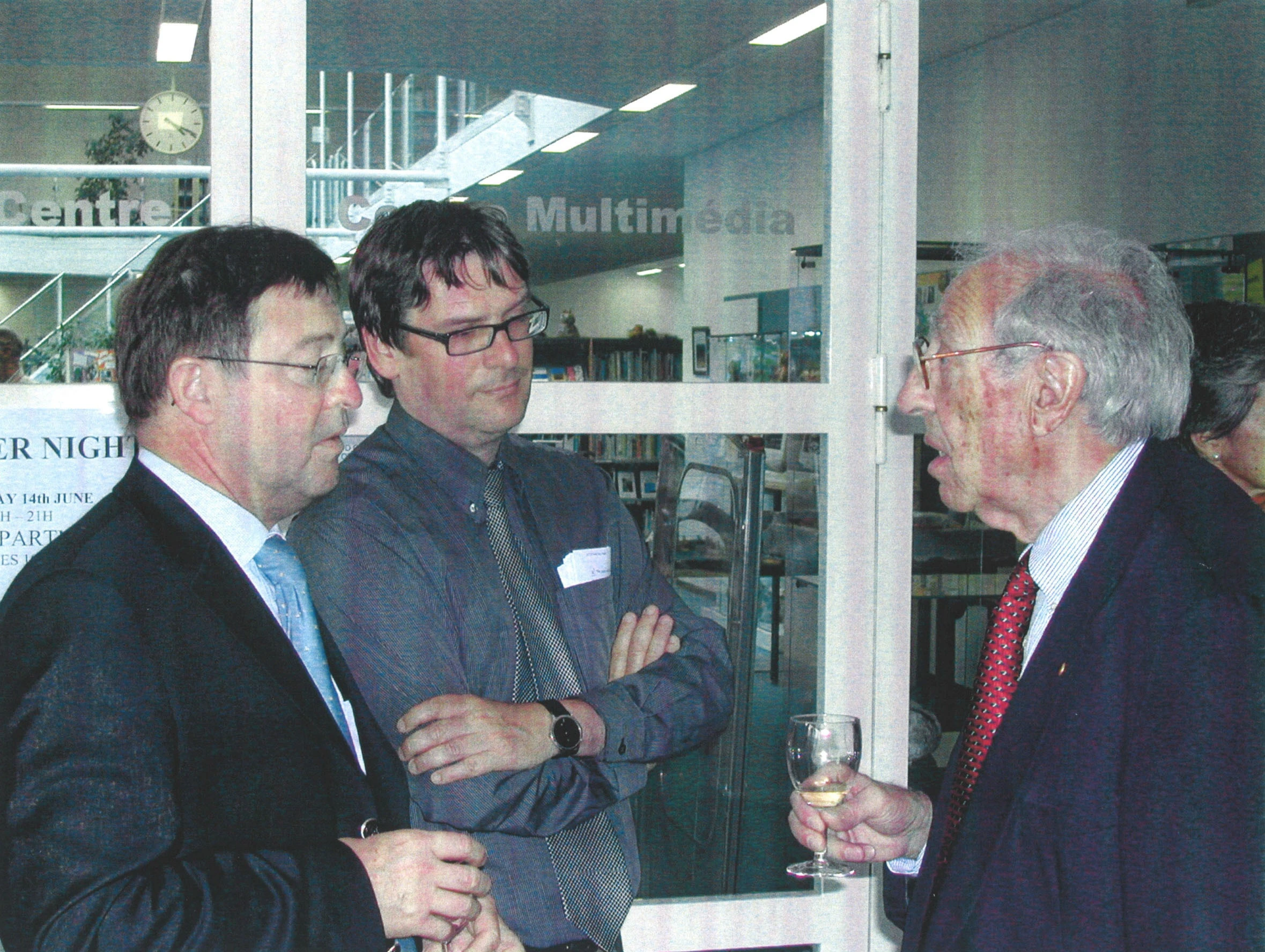
Notwithstanding his burgeoning reputation as one of the world’s great scientific minds, and the many demands on his time that his fame entailed, Dr Fischer never lost sight of his eight happy years La Châtaigneraie, and in 1992 he singled it out in his brief autobiography for the Nobel Foundation. According to former La Chât director Michel Chinal, he made a point of visiting his alma mater in Founex whenever conferences brought him back to Geneva. His most recent visit, during which he interacted amiably with students and staff, took place in June 2005. Frédéric Duchêne, La Chât’s Secondary School librarian, was struck at the time by Dr Fischer’s unpretentiousness and accessibility.
Given his values (at the age of 97 he participated in a march to protest against President Trump’s proposed budget cuts to the National Institutes of Health and the Environmental Protection Agency) and his international, multicultural outlook, Dr Fischer could not but have been pleased by the reinvigoration of La Chât’s intrinsic moral principles and commitment to education for peace since it joined the International School of Geneva.
*Depending on how "campus" is defined, the Pregny-Rigot Early Years Centre (formerly the United Nations School), added to the Foundation in 1975, could be regarded as Ecolint's third campus; this would make Campus des Nations our fourth campus. An additional nuance would be the case of La Châtaigneraie's Primary School annexe in Mies, which opened in 1999 and eventually absorbed by Campus des Nations in 2005. Some might choose to see Mies as Ecolint's fourth campus, in which case we would have to relegate Nations to fifth place, chronologically speaking.