When 1956 Imagined 2006: A young student’s prediction of campus life
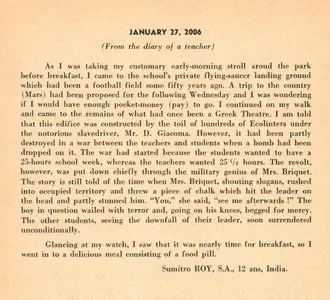
Back in 1956, for the Ecolint magazine a student took a creative leap into the future, imagining campus life in 2006 through the pages of a fictional teacher’s journal. A charming and curious snapshot of what the future was supposed to look like!
January 27, 2006
(from the diary of a teacher)
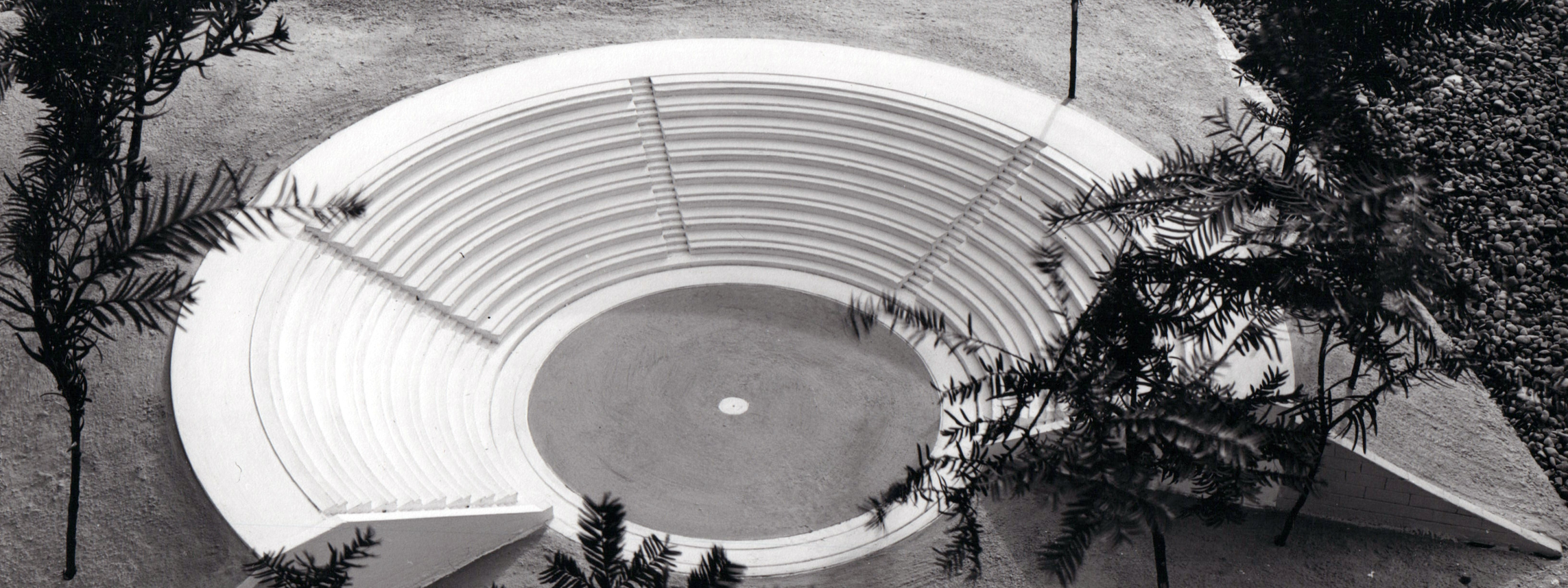
As I was taking my customary early-morning stroll around the park before breakfast, I came to the school’s private flying-saucer landing ground which had been a football field some fifty years ago. A trip to the country (Mars) had been proposed for the following Wednesday and I was wondering if I would have enough pocket-money (pay) to go. I continued on my walk and came to the remains of what had once been the Greek Theatre. I am told that the edifice was constructed by the toil of hundreds of Ecolinters under the notorious slavedrivers, Mr, D. Giacoma. However, it had been partly destroyed in a war between the teachers and students when a bomb had been dropped on it. The war had started because the students wanted to have a 25-hours school week, whereas the teachers wanted a 25½ hours. The revolt, however, was put down chiefly through the military genius of Mrs. Briquet. The story is still told of the time when Mrs. Briquet, shouting slogans, rushed into occupied territory and threw a piece of chalk which hit the leader on the head and partly stunned him. “You,”she said, “see me afterwards !” the boy in question wailed with terror and, going on his knees, begged for mercy. The other students, seeing the downfall of their leader, soon surrendered unconditionally.
Glancing at my watch, I saw that it was nearly time for breakfast, so I went in to a delicious meal consisting of a food pill.
Sumitro ROY, S.A., 12 ans, India.
Seventy years later, we can smile at this imaginative glimpse of the future and be quietly grateful that some predictions never came to pass. Food pills did not replace rösti, fondue, or other cherished delicacies, and campus life remains as rich and convivial as ever. Most reassuring of all, the Greek Theatre still stands today, a familiar landmark linking generations, and a reminder that while ideas about the future may change, the spirit of the campus endures.