

Jennifer Hunt, Professor of economics LGB 1983
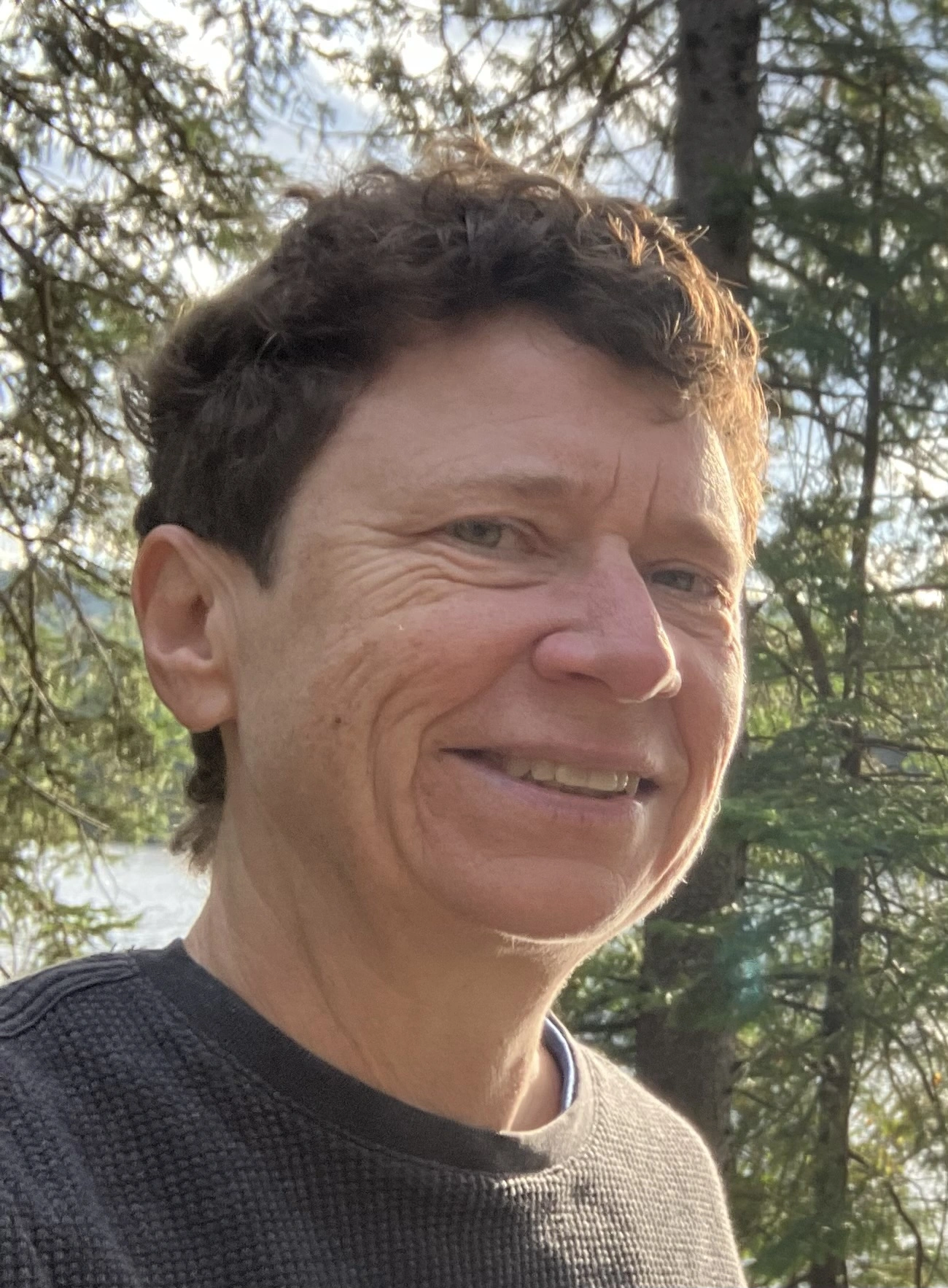
Jennifer Hunt
La Grande Boissière, 1983
Professor of economics at Rutgers University
USA
Find out more about me:
Among my favourite Ecolint memories are Saturday school ski trips, the ski and basketball teams
In order to pursue research in economics, I became a professor, first at Yale, then the University of Montreal, McGill, and now Rutgers University in New Jersey. I commute to Rutgers from Manhattan. In my research, I use statistical analysis to study the labor markets of different countries, with a particular focus on immigration. Because my interest is in the policy applications of research, I seized the opportunity to serve in 2013-2015 first as Chief Economist at the US Department of Labor, then as Deputy Assistant Secretary for Microeconomic Analysis at the US Department of the Treasury.
My international school experience began with kindergarten and first grade at the UN School (later Ecolint’s Pregny-Rigot). After a spell in my native Australia, I returned for 3rd grade at La Gradelle and 4th to 13th grades at la Grande Boissière, where I graduated in 1983. I went on to obtain a bachelor’s degree from MIT and a PhD from Harvard.
Among my favourite Ecolint memories are Saturday school ski trips, the ski and basketball teams; learning how waves work, the implications of special relativity, how to integrate, and the driving forces of the French revolution; and the friends and excellent teachers who made these things fun and interesting.
In my undergraduate studies in engineering, I benefitted from my excellent academic preparation, particularly in physics. When I turned to research in economics, I benefitted from the understanding that policy lessons can be learned in a variety of countries and from the ability to empathize with people in different countries. My languages have allowed me to study labor markets in several countries.
I entered electrical engineering in part because it was a very hot field when I was making my decision, yet my graduation year of 1987 marked the all-time peak in electrical engineering degrees awarded in the US. After more than doubling from 1977 to 1987, the number had fallen most of the way back to the 1977 level by 1999. What is hot can change quickly, so were I choosing my bachelor’s field again, I would discount what is hot.
My legacy: I would like to leave a better understanding of how wages, particularly of the low-skilled, can be increased, how unemployment can be reduced, and how people’s lives can be improved through immigration.
My words of wisdom for Ecolint students: If possible, attend college in the US, where one does not need to commit early to a field of study, but can instead investigate more options than are available at Ecolint. Choose a bachelor’s field that you both love and are good at, while realizing that grade inflation in humanities can distort perceptions of what one is good at. Do also consider how flexible and generalizable the knowledge imparted is, and if your chosen field is very risky or narrow (eg film studies; very applied degrees), have a plan B, such a minor. Try to envisage a career that improves the world, while realizing that the world can be improved in many different ways. Finally, realize that unlike Ecolint, much of the outside world is very parochial, and some choices of field can make the world seem to disappear. There is very useful information on occupations at www.bls.gov/ooh.