
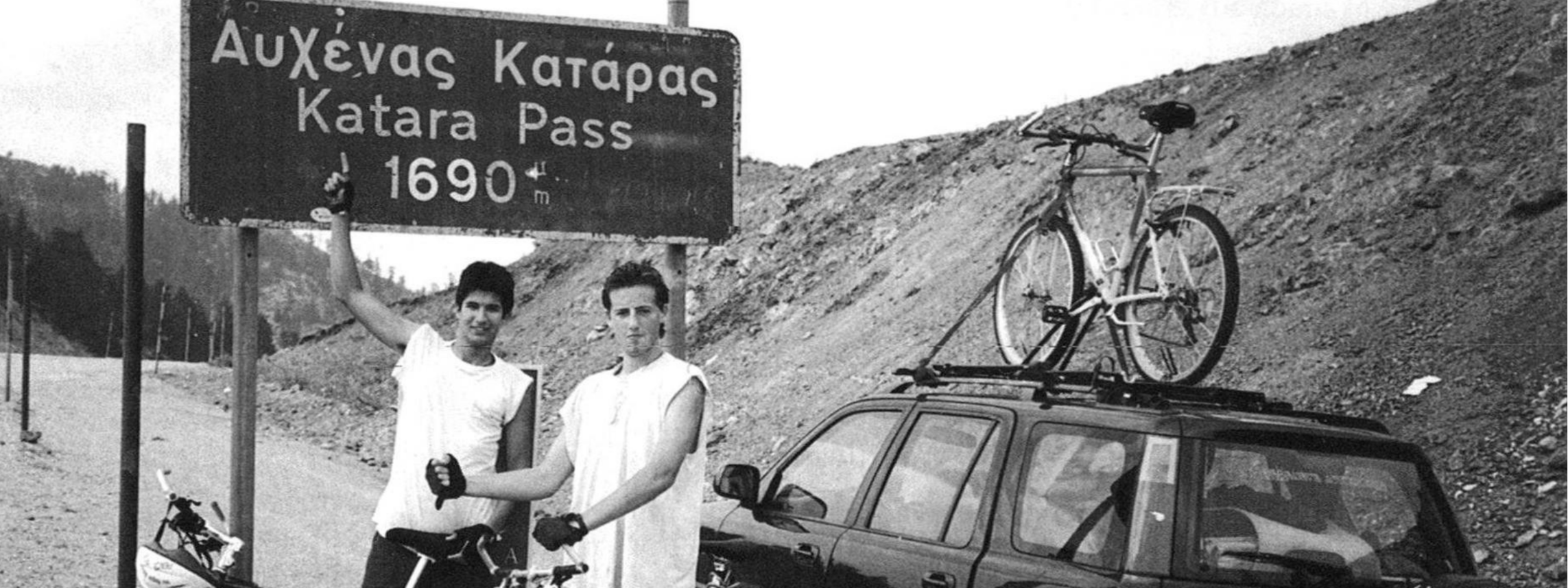
The Peace Riders: Nearly 30 Years On
In 1998, two students, Dylan Batten and Ivan Ovando, decided to turn what had begun as an impossible idea, almost a joke, into reality. Calling themselves the “Peace Riders,” they set out on an extraordinary 2,500-kilometre cycling journey from Geneva to Istanbul, travelling through Balkan countries still bearing the scars of conflict and war.
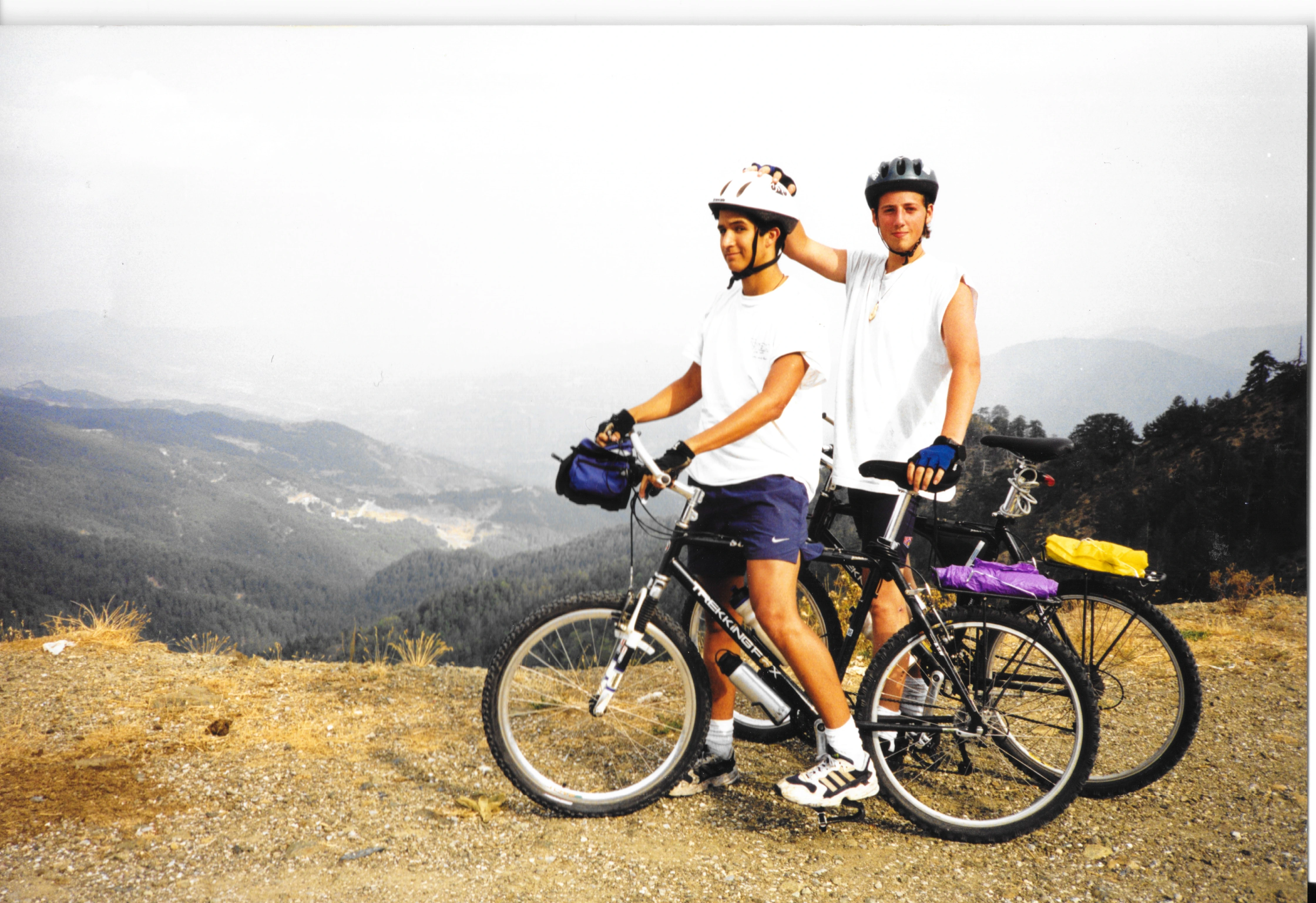
What started as an adventure quickly became something much greater. Along the way, after witnessing tensions and conflict among young Greeks and Cypriots they met during their journey, Dylan and Ivan felt compelled to act. Through their efforts, they successfully raised funds to bring young Greek and Turkish Cypriots to the Hague Peace Conference in 1999.
Nearly three decades later, we caught up with Dylan and Ivan to reflect on the journey that helped shape their futures.
Today, Dylan is a Fellow of the Royal Geographical Society, specialising in Cultural Heritage and Sustainable Development, as well as a Chartered Surveyor. Ivan works as an International Cooperation Officer for the European Commission. Looking back, both agree that the experience was transformative, not only in defining their professional paths but also in shaping who they became as individuals and giving them a strong sense of purpose. Perhaps not surprisingly, both have dedicated their career to positive change.
For Ivan, the ride remains a lasting source of inspiration. Whenever he faces challenges or needs motivation, he often thinks back to those difficult mountain passes, cycling with strong headwinds and lorries rushing past. Remembering what he overcame reminds him of what is possible through perseverance. Alongside those moments of challenge are vivid memories of the breathtaking landscapes they crossed and the unforgettable feeling of reaching Istanbul at the end of their journey. His passion for cycling remains, and he still rides daily and now looks forward to sharing that same spirit of adventure with his two daughters on cycling and camping weekends.
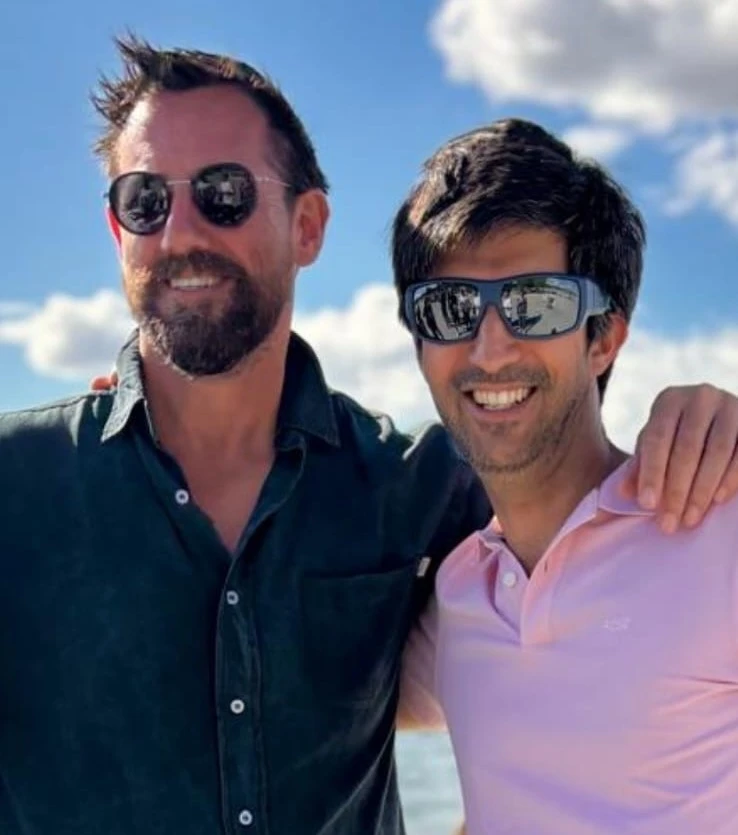
For Dylan, the journey planted seeds that would influence the course of his life. Witnessing, as a teenager, communities affected by war and division left a profound impact on him. It shaped his values and ultimately led him to shift career to creating positive change and contributing to a better world.
In the text below, Dylan reflects on his professional journey and the lessons that emerged from that experience. To future generations and young Ecolint alumni, he shares the same message of peace that he and Ivan carried with them nearly 30 years ago: building a better world may not always be glamorous or easy, but it is essential. Progress begins with people willing to believe in positive change, take action, and choose hope, values that remain at the heart of Ecolint’s mission.
“I have been asked to write about my strongest memory of the 2,500km bike ride to Istanbul with Ivan, how that experience shaped me and if I have done any similar adventures since. The ride itself was brutal, but not as brutal as a detour to Bihac in Bosnia-Herzegovina, we passed town after town, hollowed out by shelling and riddled with bullet holes shortly after the war. We sat in Red Cross camps talking to kids with missing parents, brothers, sisters and in many cases limbs from the conflict. The highlight of the detour was supposed to be us being interviewed by national television, the strongest memory, however, was being exposed to the aftermath of war and the terminal endpoint of nationalistic racism. Yet as teenagers, we genuinely believed the world was growing out of these primitive worldviews, we thought we were riding out of the dark ages and into the era of the Global Village.
Students at Ecolint today, reading this may think that 1999 optimism was tragically naive. It is a sad truth that conflicts are still being waged for highly dubious reasons and the macro-level machinery of the world looks remarkably unchanged. However, the scale of the world’s problems is exactly why you must eventually decide how you will interact with its systems.
Years after that bike ride, the abstract idealism of my youth collided with the mechanical reality of global capital. I was based in Malaysia, while working for one of the world’s largest commercial real estate companies. A file dropped onto my desk: a map detailing an area 150 by 50 kilometers in Sarawak, Borneo, the second most biodiverse region on the planet. Looking at the maps, I rapidly established that it was virgin rainforest, my directive, was to sell it to oil palm plantations.
When I pointed out that we couldn't touch virgin rainforest, of which less than 5% remained in the region, the response was a procedural sleight of hand: “classify it as secondary and move on.”
This is how the extractive machinery works. It is not cartoonishly evil; it is bureaucratic, systemic and highly efficient at pulling natural and human resources into capital markets. I had a choice, tell myself the only way to affect change is from the inside, or vote with my feet, I handed in my resignation. A couple of years later, I watched the Mayor of London cut the ribbon on a £9bn redevelopment project, funded by the very same client I was asked to sell the land to. In my personal view, that project was not a fair trade for the total destruction of 300 million year old rainforests that will never grow back.
At some point every student will eventually face a moment like this. You will have to ask yourself what principles you stand for, and whether you are willing to hold that line when it threatens your progression or your paycheck.
You can always just walk away, but you also have to build. So I stepped away from capital markets and into sustainable development projects as a chartered surveyor, I set up social enterprise projects and continued my fieldwork eventually gaining Fellowship at the Royal Geographic Society, specialising in Cultural Heritage and Sustainable Development. That time was spent actively seeking out, exploring and experimenting with building counter-systems. This work is not glamorous. It is rigorous, iterative problem solving.
Aside from ongoing professional work in sustainable development; other projects included working with Makerere University to connect highly talented artisans and single mothers in Uganda to international markets, providing income to feed, educate and pay for healthcare for their children. It meant tracking down a displaced tribe of indigenous people called the Wounaan in Colombia to preserve museum grade artistry. This took me into ‘Red Zones’, megaslums where police and the military do not enter. It meant setting up projects in isolated areas of Indonesia creating over 1,000 jobs for artisans making sustainable products and providing over 25,000 meals to families in extreme poverty. It meant working with the Environmental Bamboo Foundation and the Ministry for the Environment in Indonesia, on projects aimed at restoring millions of hectares of degraded, deforested land and activating markets for bamboo to decarbonize the atmosphere. Bamboo may be the holy grail of sustainability, holding the potential to reverse climate change if mass adoption was ever achieved, by extracting and then locking atmospheric carbon into the built environment.
Some of these projects succeeded. Some of them failed. If you have been considering similar work for your future, it must be said, in choosing to work in restoring ecosystems or supporting isolated communities, you will be rubbing against the grain. You will face friction that us X Gen are all very aware of, being a ‘force for good’ is a much harder decision to make today than it was in our day. It is a simple historical fact that there has been a highly effective, comprehensive and cynical campaign to throw anyone trying to make a positive impact into a highly politicized bucket called "woke". Do not let the noise distract you. There is nothing “woke” about having a backbone and taking on real challenges in difficult environments. The amazing people doing this kind of work come from all over the world and across the political spectrum.
Stewardship of your environment and your community is one of the most ancient and legitimate human drives. My generation didn’t have social media, but if you can park any desire for self-aggrandization or performative virtue signaling, then the path is clear to become a real influencer and make a serious impact. Just ignore the Lilliputians when they inevitably sling their arrows.
I would like to end by stating without any reservation, from my decades of exploration and travel, that the overwhelming majority of people on this planet simply want to live in a thriving, flourishing ecosystem without being subjected to geopolitical conflicts and poverty. People want PEACE, it is absurdly basic. After graduation, if you do make the decision to join the Rebel Alliance and focus on positive growth rather than extraction and destruction, we need your aptitudes. Dive deep into philosophy, geography, the sciences and sustainability. Understand the depth and nuance of this beautiful, interconnected world. Keep your head up, maintain your backbone and be prepared to hold the line.
Good luck, we are all rooting for you!
Sincerely, Dylan D. Batten MRICS FRGS”