

Ratko Djukanovic, Professor of Medicine, Southampton University, LGB 1972
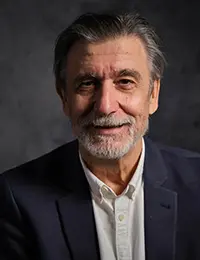
Ratko Djukanovic
La Grande Boissière, 1972
Professor of Medicine, Southampton University
United Kingdom
Learn more about me :
- University of Southampton personal page
- University Hospital Southampton personal research page
- University Hospital Clinical Service personal page
- NIHR Southampton Biomedical Research Unit
- Google Scholar
I live in Southampton, UK, where I work as a Professor of Medicine, at Southampton University, and a Consultant Physician in Respiratory Medicine. I have led a large multi-disciplinary team of biomedical researchers, working on mechanisms of common diseases and helping to develop new diagnostics and drugs. My personal focus has been on chronic airway disease, in particular bronchial asthma, a common disease across the life course. In more recent times, I have focused on severe forms of asthma where standard drugs are ineffective. I have always embraced collaboration, both locally, nationally (UK) and internationally. I have led the creation of research networks in my specialty, including two large European networks. One them U-BIOPRED, a study of predictive biomarkers and mechanisms of respiratory disease, funded by the EU Innovative Medicines Initiative ((IMI), focused on disease mechanisms, aiming to stratify a complex disease into subtypes for which more effective treatment could be developed. The other, SHARP, is a clinical collaboration involving more than 17,000 patients from 29 with severe asthma, their doctors, scientists, and five pharmaceutical companies, all working for the benefit of patients’ needs.
When thinking about Ecolint, I have lots of wonderful memories. I cannot recall falling out with anyone – which for a teenager is an achievement – and I remember not wanting to restrict my friendship to any particular group, whether “cool”, “sporty (jocks), or studious (“nerdy”) because I found I had something in common with all.
That would be my favourite overall memory: inclusivity and tolerance of any differences that one could attribute to cultural, ethnic, or gender differences. I also enjoyed playing in a band called “Deep and Wide”, going to school dances and ski trips, and playing basketball, but if I had to choose the most fulfilling it would be sitting on the Seniors’ lawn and/or the Seniors’ room above the library. Cosy, just for us….
After being a member of the second generation of students that opted for the International Baccalaureate (IB) I started studying medicine in Geneva (which recognized the IB diploma), and in year 3 decided to return to my country of birth (Yugoslavia) to “find my roots”, a commonly reported issue shared by many Ecolint students in my generation who felt that they did not “really belong to any country”. The Ecolint experience prepared me well for studying with Swiss students and also helped me to adapt to Belgrade. The experience also helped me to move to the UK in 1988 for postgraduate studies, not least the fact that I had been exposed to so much of British culture through my British school friends and my teachers. And then, in 1991, came a period of agony caused by the civil war in Yugoslavia. Whilst this caused enormous stress to me and my (internationally minded) German wife who had lived in Belgrade with me for 10 years, my experience from my days in international schools (first Accra, Ghana, then Geneva) gave me a sense of freedom from nationalism and helped me to think with understanding and compassion for all nations that were at war with one another. We brought up our children in an international spirit and traveled with them a lot and I can proudly say that they have a strongly international mindset.
Life is a classroom where one learns as it unfolds so, by and large, if I have to do it all over again I would not do anything differently. I accept that I have made mistakes and misjudged some people, but I have learned from this.
My words of wisdom for Ecolint students: do not get hung up on your national identity; the world is your oyster. History provides us with ample evidence that national identities are a major driver of aggression, i.e. wars. If we all choose to give ourselves an international identity, chances of conflict will be markedly reduced. We, who were fortunate to be raised with internationalist values, can help to make the world more tolerant and fairer.
What legacy do you want to leave? An ethos of collegiality and a first-class research environment, underpinned by care for people. And that it’s ok to have bow legs.