

Pauline Borg, Founder & CEO – KAIROS, CHA 2009
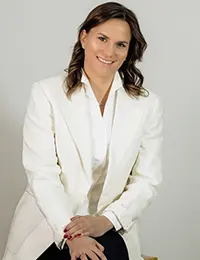
Pauline Borg
La Châtaigneraie, 2009
Founder & CEO – KAIROS
Switzerland
Find more about me:
For as long as I can remember, I've been aware of the great privilege I’ve had, growing up in Switzerland, going to International School, etc… and, as such, have always felt a pull to do something that can make a positive difference in people's lives that may not have been as privileged as I have. The desire to affect positive change has been the one red thread in my career and has led me to where I am today. I’m currently based in Zürich, and I run an advisory business called KAIROS, which focuses on advising private individuals, business families and family offices on how to utilise all their different types of capital to drive a positive impact on the environment, society and the economy.
I have always felt a pull to do something that can make a positive difference in people's lives that may not have been as privileged as I have. The desire to affect positive change has been the one red thread in my career and has led me to where I am today
My realisation of the severity and acceleration of climate change, and its implications for humanity, led me to an introspection around the role that private wealth and family-owned businesses can play in solving some of the environmental and social challenges our world is facing. This, ultimately, is what led me to set up KAIROS. With this in mind, I work with families to identify the causes that matter to them, and devise strategies on how they can leverage their poly-capital to drive positive change—be it through their business, investments or philanthropy—and, in many cases, their network, influence and skills can also be powerful tools to affect change, but that are often overlooked. I also spend time advocating for a new narrative on the transformative potential of private wealth and family businesses can have in driving positive and systemic change.
The term ‘Third Culture Kid’ is something that I believe most alumni from Ecolint can relate to: the feeling of “home” not necessarily being a physical place, but rather by being surrounded by individuals who share similar experiences and open-mindedness that can come from exposure to various cultures and periods living outside of one's own culture.
I couldn’t think of a specific Ecolint favourite memory, per se; however, I’d have to say that my favourite aspect of Ecolint was the diversity of the students. It’s something that I took completely for granted whilst I was in school. The exposure to different cultures and nationalities was truly formative in shaping who I am today. This became evident throughout my studies—and at times, still does. The term ‘Third Culture Kid’ is something that I believe most alumni from Ecolint can relate to: the feeling of “home” not necessarily being a physical place, but rather by being surrounded by individuals who share similar experiences and open-mindedness that can come from exposure to various cultures and periods living outside of one's own culture.
Ecolint definitely helped me in my studies. Graduating with an International Baccalaureate degree ensured that I was better prepared for university than most other higher education programmes, as it provided me with the skills and critical thinking required to succeed. I’d also say that Ecolint taught me adaptability and open-mindedness, which are pivotal to any pursuit.
I don’t think I would do anything differently; I would, however, put less pressure on myself in “having it all figured out” straight after graduation and following my university studies. I think there’s so much pressure to know who we are to become, and what we’d like to do as a career coming out of school, that we forget that life is a journey and an opportunity for life-long learning. We evolve as individuals, as do our passions and our interests. Graduating from Ecolint, I had great aspirations to become a photographer… Look at how that turned out!
My words of wisdom for students: First, be kind. It’s a superpower. People may forget what you said, but they will never forget how you made them feel. Plus, you never know when your paths may cross 10 or 20 years down the road—the world is a small place. Second, you are part of one of the most privileged communities in the world; identify how you can use that privilege and access to affect positive change.
My legacy: Gosh, that’s a big question! I’d say that I’d like to be remembered not necessarily for the things I’ve done, but rather for the person that I am and how I’ve made people feel. I hope that my work and advocacy efforts would have inspired many to take action and to understand that they, too, can be agents of change.
You are part of one of the most privileged communities in the world; identify how you can use that privilege and access to affect positive change.